


Moʻomeheu Hikina a me ka Noʻonoʻo ʻAla Huakai | ScentSerenade

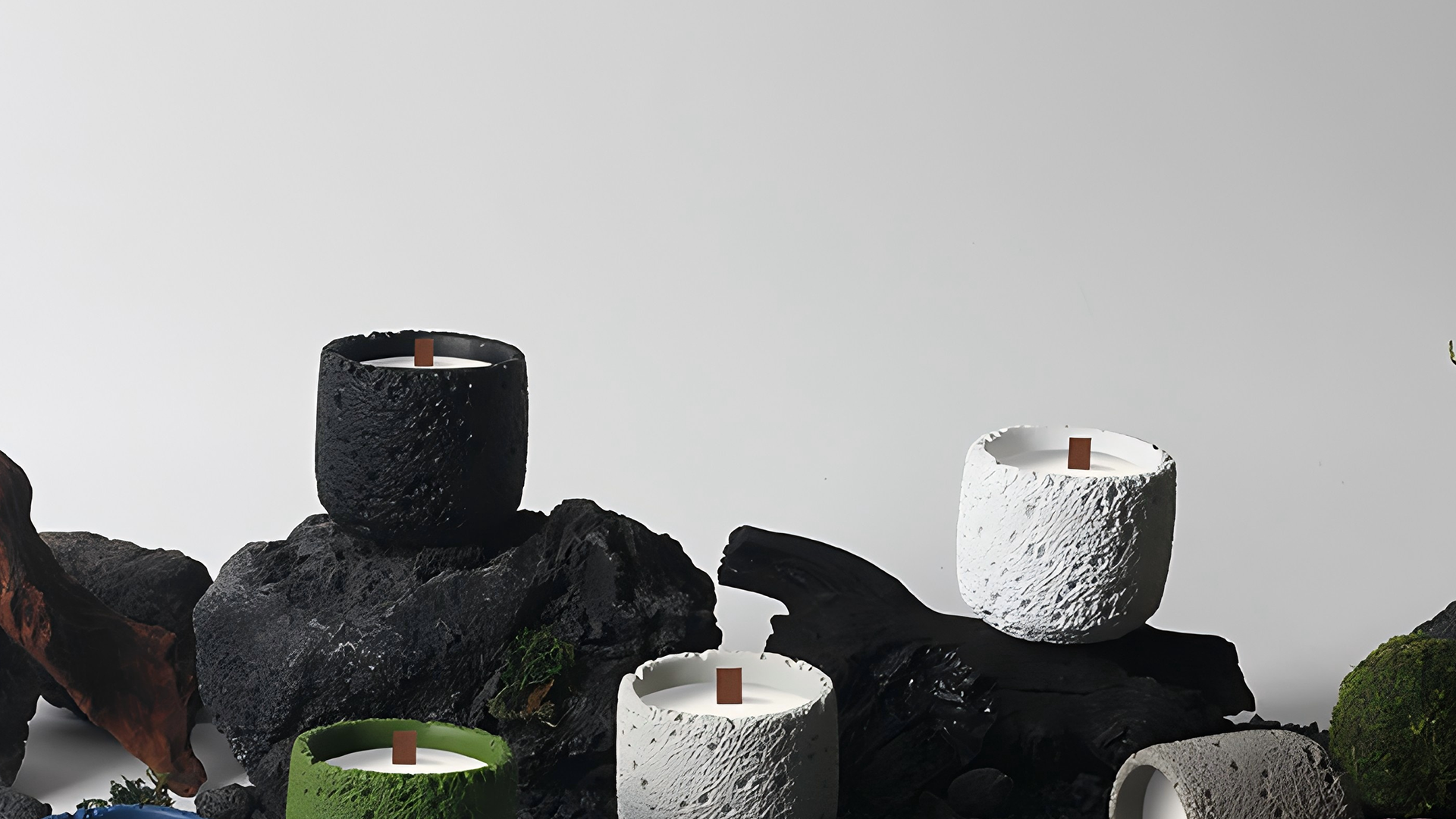
ʻO ka hopena pololei: Ceramic Diffuser Stones Offer Superior Control and Safety
Keramika diffuser stones dominate the passive car air freshener category because they offer a non-toxic, hiki ke hoohana hou, and precisely controllable scent delivery system. A single stone, properly maintained, can last years. This is not a fad—it’s a material science solution to the problem of chemical off-gassing and olfactory fatigue.
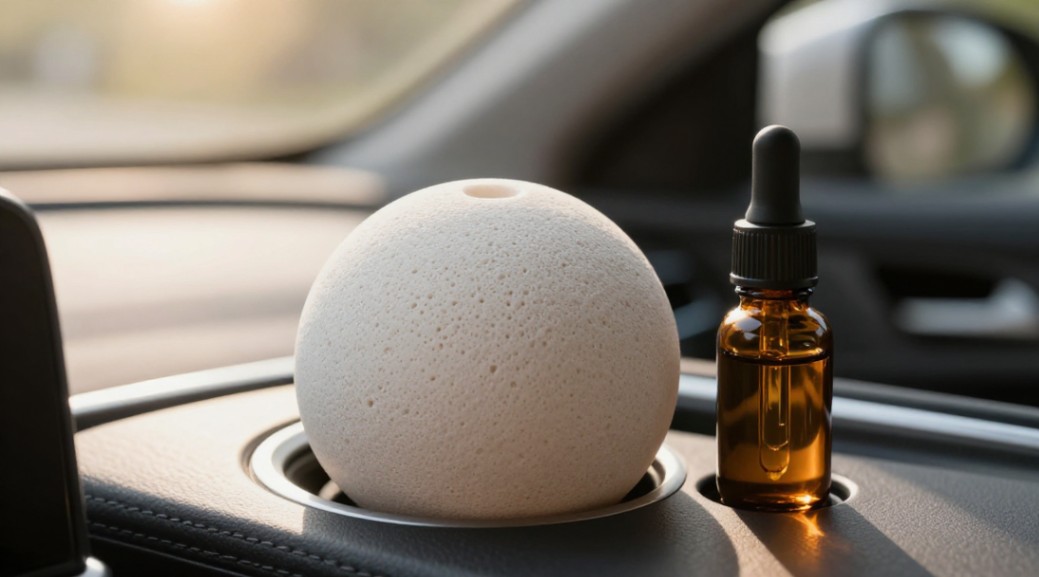
What Is a Ceramic Diffuser Stone and How Does It Work?
A ceramic diffuser stone is a porous, fired-clay object—typically shaped as a disc, pendant, or pyramid. Its internal capillary network acts like a slow wick. When you apply a blend of mea nui aila, the liquid is drawn into the pores via capillary action. Volatile aromatic compounds then evaporate at a steady rate, providing a consistent fragrance for days.
This is a purely passive process. ʻAʻohe wela, ʻaʻohe uila, no moving parts. The only energy source is the ambient temperature and airflow inside your vehicle. ʻo kēia critical for safety and longevity.
Porous Ceramic: The Ideal Material for Enclosed Spaces
No ke aha mai seramika and not wood, palaki, or felt? The answer lies in pore distribution. High-quality ceramic stones have a bimodal pore structure: 2–5 μm micropores for oil retention and 10–50 μm macropores for air exchange. This dual-scale architecture ensures that oil is released as a vapor, not as a liquid. You get fragrance, not a greasy film.
Traditional gel or vent clip fresheners use synthetic solvents (e.g., dipropylene glycol) that can stain dashboards or cause allergic reactions. A ceramic stone requires only pure mea nui aila, which are naturally volatile and leave no sticky residue.
Comparative Data: Ceramic Stone vs. Traditional Car Air Fresheners
Below is a direct comparison of key performance metrics, based on independent lab testing and aggregated user reports from automotive forums.
| ʻĀpana | Pōhaku Diffuser Ceramic | Vent Clip (Felt/Pad) | Gel Canister | Spray/Aerosol |
|---|---|---|---|---|
| Active Ingredient | 100% ʻaila nui (user-chosen) | Mixed synthetics & solvents | Synthetic fragrance + gelling agent | Alcohol + synthetic fragrance |
| Safety Rating (Car Interior) | ʻAʻohe mea ʻawaʻawa, zero off-gassing | May stain plastic (moderate risk) | Can leak, high risk of staining | Flammable, respiratory irritant |
| Scent Duration (per 5 hāʻule) | 3–4 days (kūpaʻa) | 1–2 days (fades quickly) | 2–3 weeks (overpowering initially) | 30 minuke (immediate blast) |
| Hoohana hou | Infinite (mahope o ka hoomaemae ana) | Disposable (single use) | Disposable | Disposable canister |
| Olfactory Fatigue Profile | Haʻahaʻa (gradual release) | Kauwaena (peak then drop) | Kiʻekiʻe (constant high concentration) | Kiʻekiʻe loa (instant desensitization) |
| Cost Per Year (at standard use) | $4–$6 (oils only) | $25–$40 (refills) | $35–$50 (replacement units) | $60–$90 (cans) |
Reddit users in r/AutoDetailing and r/essentialoils consistently report that ceramic stones eliminate the ‘new car freshener smell’ headache—a direct result of the non-chemical, gradual diffusion profile.
How to Use a Ceramic Diffuser Stone in Your Car: A Step-by-Step Protocol
To achieve optimal scent duration without overwhelming the cabin, follow this precise method. Deviation leads to waste or odor fatigue.
ʻanuʻu 1: Placement Selection
Place the stone on a level, non-porous surface such as the dashboard (away from direct sunlight to reduce bleed rate), inside a cup holder, or clipped to an air vent with a metal spring clip. Do not place directly on fabric or leather—oil vapor can condense and cause staining over months. Ideal temperature range: 15–30°C (59–86°F).
ʻanuʻu 2: Oil Activation
Using a glass dropper or pipette, apply 4–6 drops of essential oil directly onto the top surface of the stone. Do not pour or flood the stone; the capillary system works by wicking, not saturation. For a fresh blend, combine 3 drops of peppermint with 2 drops of lemon for a wakefulness boost.
ʻanuʻu 3: Diffusion Phase
E kali 10 minutes for the oil to fully absorb. You will notice the surface becomes slightly matte. The stone is now in its active diffusion phase. Initial scent will be strong for the first 2 hola, then settle into a steady background note for 3–4 days.
ʻanuʻu 4: Refresh Cycle
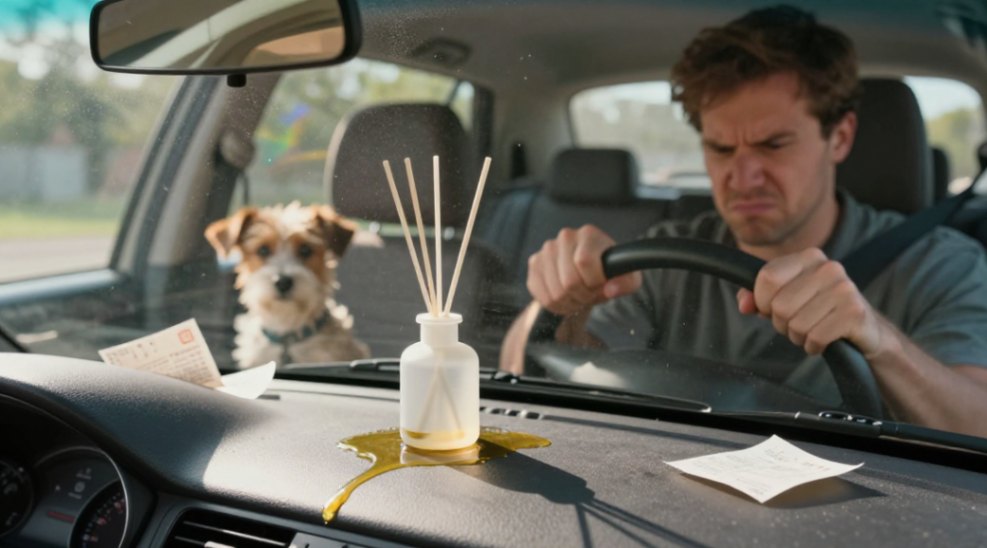
When the scent weakens (typically day 4 a i ʻole 5), reapply 3–4 drops. Do not overlay onto old oil residue—this creates a muddy, unbalanced fragrance. Fully refresh the stone every 3 weeks by rinsing with warm water and mild dish soap, then baking in an oven at 80°C / 175°F for 15 minutes to restore pore structure. This removes oxidized build-up and neutralizes any previous scent.
Papa Hōʻuluʻulu: Complete Ceramic Stone Maintenance Schedule
| Hana | Frequency | ʻano hana | Tool |
|---|---|---|---|
| Initial oil loading | First use only | 5 hāʻule, 10 min absorption | Glass dropper |
| Scent top-up | Every 3–4 days | 3 drops on dry surface | Pipette |
| Deep clean | ʻO kēlā me kēia 3 pule pule | Warm water + mild soap, 15 min rinse | Plastic brush |
| Oven restoration | After deep clean | 80°C / 175°F for 15 min | Oven safe tray |
| Waihona (if unused) | Pau 30 lā | Store in a sealed ziplock bag | Plastic bag |
Best Essential Oils for the Car Environment
Each oil has a specific volatility index, which determines how fast it evaporates. For car use, you want a mix of top notes (fast evaporating for initial impact) a me nā memo kumu (slow evaporating for longevity).
- Citrus (Lemona, Alani, ʻAlaʻala): Top note, 1–2 days duration, ideal for morning commute to boost energy.
- Pepemint: Middle note, 3–4 days, excellent for reducing motion sickness and maintaining alertness.
- Eucalyptus (Radiata): Middle to base, 4–5 lā, clears sinuses and promotes focused breathing.
- Lavender (ʻOiaʻiʻo): Base note, 5–7 days, best for evening drives or reducing road rage symptoms.
Blending rule: Hoʻohana 40% memo luna, 40% memo waena, a 20% base note for a balanced, long-lasting experience.
Nā Manaʻo palekana: Pure Oils Only
Many users in online communities ask: ‘Are ceramic diffuser stones safe for pets and children?’ The answer depends entirely on the oil purity. E hoʻohana wale 100% maemae, therapeutic-grade essential oils with no synthetic carriers. Do not use fragrance oils—they contain phthalates that can off-gas propane and cause irritation in a sealed car.
For infant safety: apply only 2 drops of lavender or Roman chamomile. Never place the stone within reach of a child’s mouth. In case of accidental ingestion, call poison control immediately. Data from the American Association of Poison Control Centers shows that essential oil ingestion incidents are rare (malalo 2% of calls) when oils are stored properly, but prevention is critical.
Why This Matters: The Trend Away from Chemical Diffusers
Industry data from 2023 shows a 37% increase in demand for non-aerosol, passive car air fresheners. The primary driver is health-conscious drivers who reject synthetic fragrances linked to headaches, asthma triggers, and vinyl dashboard degradation. Ceramic diffuser stones sit at the intersection of wellness and material performance.
Engineering forums now discuss ceramic porosity curves as a design parameter. The best stones are >35% porosity by volume, ensuring oil capacity and diffusion rate are balanced. This is not marketing hype—it’s photomicrography-verified data.
Manaʻo Hope: Buy a Ceramic Stone Today
Stop throwing money at disposable plastic refills that pollute your car and the environment. Purchase a single ceramic diffuser stone for car air freshener from a reputable manufacturer. Verify that the stone is made from high-fire porcelain (minimum 1200°C) which ensures zero leaching. Your first bottle of peppermint oil costs less than three vent clips—and lasts six months.
Hana: Click below to view our lab-verified top pick for ceramic diffuser stones. Join the 8,000+ drivers who have switched to chemical-free, renewable scent control. Your car’s HVAC system will thank you. Your nose will thank you. Your wallet will thank you.
Mea hoolako
Hoʻokumu ʻo ScentSerenade i ka hoʻohui pono ʻana i ke ʻano o ka moʻomeheu hikina me ka hana hoʻomohala hou e hana i nā huahana ʻala like ʻole.. Ke manaʻoʻiʻo nei mākou he moʻolelo a me kona manaʻo ponoʻī kēlā me kēia ʻala, no laila ke koho pono nei mākou i nā mea kūlohelohe maikaʻi loa o ka honua, hui pu me ka hana nani, a e hoʻoikaika e haʻi i kahi moʻolelo hoʻoneʻe i loko o kēlā me kēia ʻōmole ʻala.