


Oriental Culture and Creativity Inspired Fragrance Journey | ScentSerenade

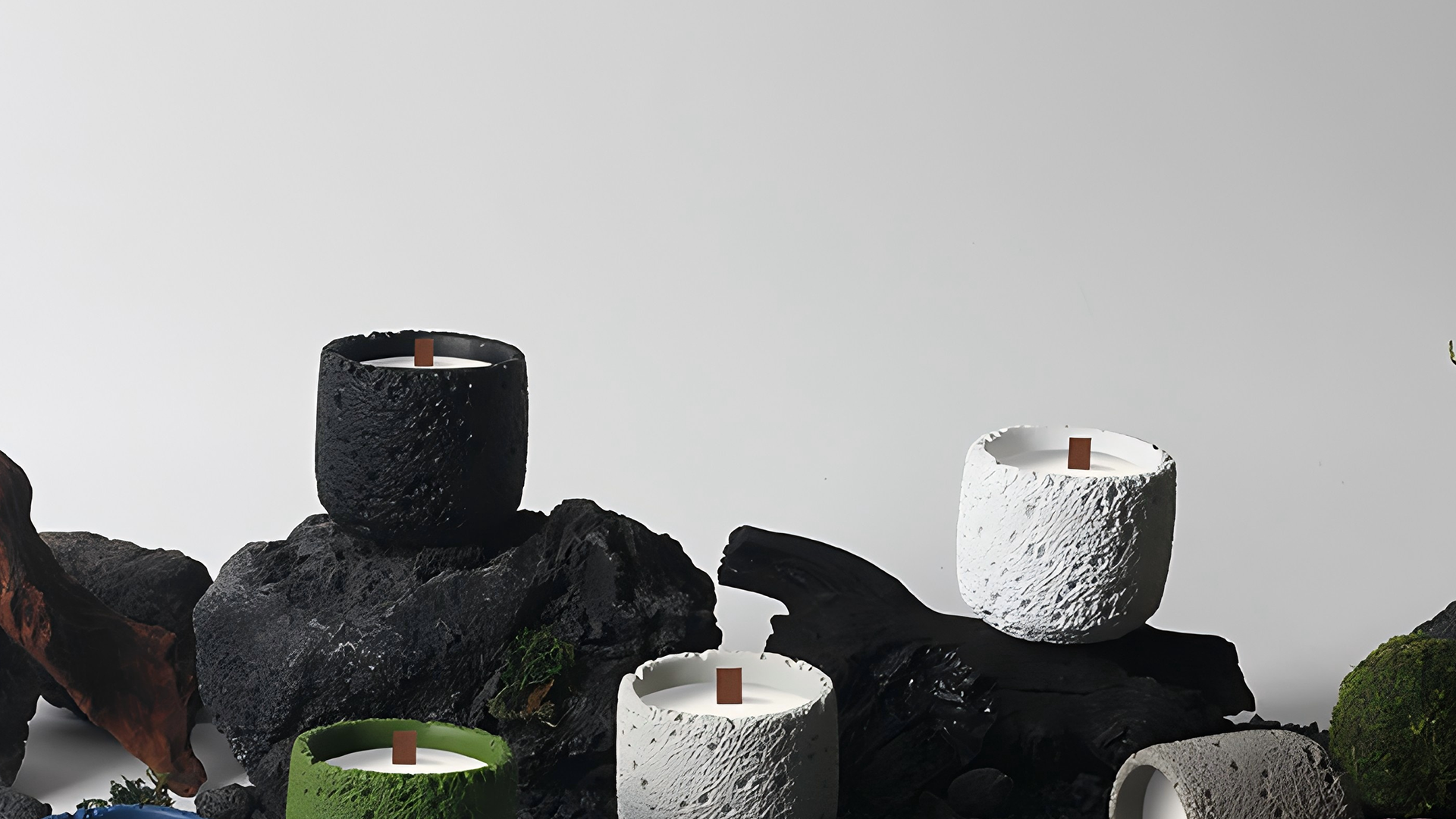
You bought an electric incense burner for resin and powder. Now you’re frustrated.
Have you ever scraped a black, smoking crust off your new hlawv while thinking, “This was supposed to be easier than charcoal”? Koj tsis yog ib leeg. Most users destroy expensive frankincense or ruin their heating element within the first month. They blame the electric incense burner for resin and powder. The truth? They misuse the tool. This article exposes the hard truths. You will learn exactly what not to do. No fluff. No “experts” quoting science they don’t practice. Tsuas yog 20+ years of burning stuff until it worked.
1. Your Temperature Setting is a Lie
You bought a burner with “variable temperature.” You set it to 400°F and hoped for smoke. Wrong move. Resin and powder incense do not need to burn. They need to melt and release aroma. Burning creates smoke, soot, and a bitter smell. It also ruins the ceramic heating element. The typical breakdown: frankincense and myrrh melt between 180°F and 200°F (82°C – 93°C). Copal and benzoin require slightly higher, around 220°F (10457 °C). Powder blends like sandalwood or lavender burn best at 160°F – 190°F (71°C – 88°C). If your burner lacks precise control, you are guessing. And guessing costs you money.
What to do instead:
Start at 160°F (7157 °C). Wait five minutes. No scent? Increase by 10°F increments. A small digital thermometer with a probe (under $10) verifies your hlawv’s actual temperature. Most cheap burners lie by 20°F – 30°F. Verify before you blame the resin.
2. Load Directly on the Element? Expect a Mess
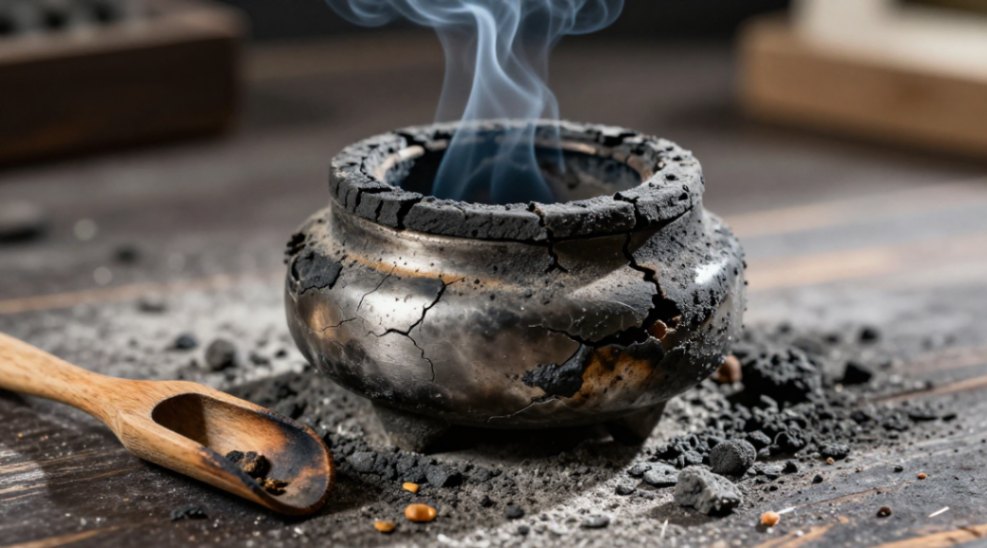
Manufacturers show you pictures of resin beads sitting directly on a glowing ceramic dish. They want you to believe it’s elegant. Nws tsis yog. Resin melts, bubbles, and sticks. Once it carbonizes, that stain is permanent. The surface becomes uneven, and the heat transfer fails. Powder sinters into a concrete-like crust. Cleaning becomes impossible without scratching the element.
The only solution: Use a foil cup.
Take a standard aluminum foil cup (the kind used for tea light oil burners). Place it inside the burner dish. Put your resin or powder inside the cup. This catches all drips. When done, lift the cup and toss it. Your heating surface stays bone clean. Cleanliness equals consistent scent. It also means you can switch from frankincense to sandalwood without cross-contamination of smell.
3. You Never Clean the Burner. Now it Smells Like Burnt Garbage.
Residue builds up silently. After five uses, your burner smells like the back alley of a cheap incense shop. The old residue burns at a different temperature than your new resin. The two aromas fight each other. The result is a muddy scent that smells like nothing specific. You think the resin is weak. It’s not. It’s the residue.
Cleaning protocol (exact steps):
Turn off the burner. Let it cool to room temperature (hais txog 20 feeb). Wipe the dish and the foil cup area with a cotton pad dipped in 91% isopropyl cawv. For stubborn crusts, soak the cotton pad and let it sit on the crust for two minutes. Then scrape gently with a wooden toothpick. Do not use metal. Metal scratches the ceramic. Scratches trap resin. You will never get clean again. Do this after every third use. Koj lub qhov ntswg yuav ua tsaug.
4. You Ignore Safety. That’s Stupid.
An electric incense burner for resin and powder runs unattended for hours. Qee qhov chaw pheej yig tsis muaj qhov tsis siv neeg kaw. Lub hauv paus tau kub txaus kom yaj cov yas nto. Koj muab tso rau ntawm lub rooj ntoo? Koj tab tom ua si nrog hluav taws. Literally.
Cov cai tsis muaj kev sib tham txog kev nyab xeeb:
- Tsis siv neeg kaw: Tsis txhob yuav ib qho hlawv uas tsis muaj qhov tshwj xeeb no. 4-teev lossis 8 teev timer yog tus qauv. Teem nws. Taug kev deb. Pw tsaug zog.
- Txias-kov sab nrauv: Kov lub hauv paus tom qab 30 feeb ntawm kev ua haujlwm. Yog tias nws hlawv koj txhais tes, Rov qab chav tsev. Qhov no tsis yog xaiv tau. Cov menyuam yaus thiab cov tsiaj sib tsoo rau hauv rooj.
- Cua: Txawm tias tsis muaj pa luam yeeb, cov tshuaj tsw qab tuaj yeem ua rau mob taub hau hauv chav kaw. Open a window. Ib qho Levoit LV-H128 cua purifier khiav ntawm qhov qis pab, tab sis hla qhov cua zoo dua.
5. Koj Kho Hmoov Zoo Li Cob. Yuam Kev Loj.
Hmoov xyab muaj qhov chaw siab dua. Nws teb sai dua rau tshav kub. Yog tias koj thauj ib lub mound ntawm hmoov ncaj qha, txheej sab saum toj hlawv ua ntej txheej hauv qab yaj. You get a flash of smoke followed by nothing. Rau powder types like sandalwood, lavender, or mixed herbal blends, use a thin layer. Spread it evenly across the foil cup. Maximum depth: 2 hli. Anything thicker wastes material.
Exact guideline:
Weigh 0.3 grams of powder. That is roughly 1/8 teaspoon. Spread it flat. Set temperature to 170°F (7757 °C). The scent will last 45 minutes to 1 a. Thaum nws ploj mus, discard and reload. Trying to “stretch” the powder by raising the temperature ruins the scent profile. Low and thin wins the game.
6. You Chose the Wrong Bowl Material. Pay Now or Pay Later.
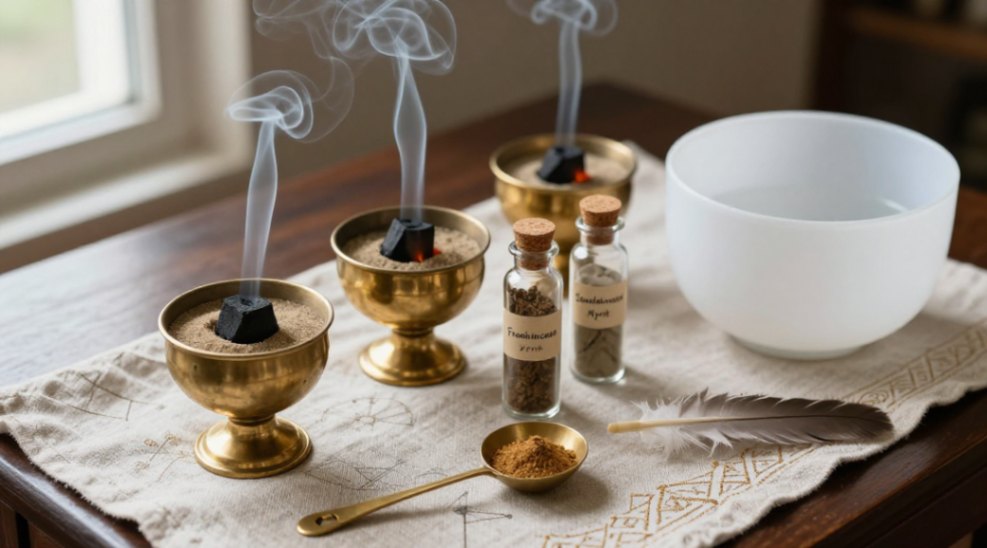
Burners come with bowls made of ceramic, glass, or mica. Ceramic or glass heating elements are the only acceptable choices for resin and powder. Mica sheets degrade over time. They flake. Cov flakes ntawd sib xyaw nrog koj cov cob. Koj nqus tau microscopic mica plua plav. Tsis zoo. Also, Mica ua kom sov tsis sib npaug. Ib lub ces kaum hlawv, lwm qhov nyob txias.
Txoj cai:
Yog tias lub tais cua sov tsis yog ceramic lossis borosilicate iav, walk away. URIKO Premium Hluav Taws Xob Xyab Hlawv siv lub tais ceramic nrog lub ntsiab lus kaw. Qhov ntawd yog tus qauv koj xav tau. Txhua yam tsawg dua yog kev cuam tshuam rau kev noj qab haus huv thiab kev ua tau zoo.
7. Koj Piv Burners rau Charcoal. Nres Qhov ntawd.
Charcoal ua haujlwm los ntawm kev hlawv ncaj qha. Nws hlawv ntawm 1200 ° F + (65057 °C). Nws tsim cov pa luam yeeb, tshauv, thiab carbon monoxide. An electric incense burner for resin and powder ua haujlwm los ntawm maj mam vaporization. Tsis muaj pa luam yeeb. Tsis muaj tshauv. Tsis muaj pa paug. Cov ntxhiab tsw yog huv dua thiab meej dua. Tab sis nws yuav tsum tau ua siab ntev. Koj tos kom tus ntxhiab tsw tsim ntau feeb, tsis yog vib nas this. Yog tias koj xav tau cov pa luam yeeb tuab tam sim ntawd, rov qab mus rau hluav taws xob. Yog tias koj xav tau nuanced aromatherapy, master lub hluav taws xob burner.
Sib piv rooj: hluav taws xob vs. thee
| Feature | Hluav taws xob xyab burner | Charcoal Burner |
|---|---|---|
| Temperature | 160°F – 220°F (controlled) | 1200°F+ (uncontrolled) |
| Smoke | Tsawg los yog tsis muaj | Hnyav |
| Tshauv | Tsis muaj | Yog |
| Resin khib nyiab | Tsawg (vaporization) | Siab (hlawv) |
| Huab cua sab hauv tsev | Muaj kev nyab xeeb rau kev siv txhua hnub | Yuav tsum muaj cua txias |
| Ntxhiab tsw precision | Siab (layered notes) | Tsawg (smoky mask) |
| Maintenance | So txhua qhov 3 siv | Ntxuav tshauv tom qab txhua siv |
Thaum twg lub tshuab hluav taws xob ci? Peb qhov xwm txheej.
Scenario 1: Kev kho ntxhiab tsw txhua hnub. Koj xav tau ntxhiab tsw zoo ib yam rau 8 teev thaum ua haujlwm. Siv lub hlawv nrog lub sijhawm thiab lub tais loj (at least 3 nti txoj kab uas hla). Thauj khoom 0.5 grams ntawm frankincense. Teem ntawm 190°F. Cov ntxhiab tsw yuav tswj kom muaj zog rau 6 hours. Recharge tav su.
Scenario 2: Resin kuaj. Koj yuav tsis tshua muaj copal lossis benzoin. Koj xav hnov ntxhiab tsw cov khoom ntshiab, tsis haus luam yeeb. Siv qhov kub qis tshaj plaws uas ua rau muaj ntxhiab tsw (nyob ib ncig ntawm 170 ° F). Tsis muaj ntawv ci khob rau thawj qhov kev xeem? Zoo, tab sis ntxuav tam sim ntawd tom qab.
Scenario 3: Cov chav tsev me me. Tsis muaj sam thiaj rau thee. You need incense without triggering smoke alarms. The electric burner is your only safe option. Place it away from air vents to avoid scent dilution.
Your next move is simple.
m. Get a reliable electric incense burner for resin and powder with ceramic heating, automatic shut-off, and foil cups. Set your temperature precisely. Clean after every third use. Your resin will last twice as long, and your room will smell exactly like the plant it came from.
If you want a burner that checks all these boxes without breaking the bank, the Uriko Electric Incense Burner is a solid choice. It has the ceramic bowl, adjustable temperature from 120°F to 400°F, and a 4-hour timer. It is not the cheapest, but it is the only one I trust after burning through seven other units. Buy it, use it correctly, and stop wasting resin.
Tus neeg muag khoom
ScentSerenade tau mob siab rau txig sib xyaw cov ntsiab lus ntawm oriental kab lis kev cai nrog kev muaj tswv yim niaj hnub los tsim cov khoom lag luam tshwj xeeb ntawm kev coj noj coj ua thiab cov tshuaj tsw qab. Peb ntseeg tias txhua tus ntxhiab tsw muaj nws zaj dab neeg tshwj xeeb thiab kev xav, yog li peb ua tib zoo xaiv lub ntiaj teb zoo tshaj plaws ntuj cov khoom xyaw, ua ke nrog exquisite craftsmanship, thiab siv zog los qhia ib zaj dab neeg tsiv nyob rau hauv txhua lub raj mis ntawm cov tshuaj tsw qab.